Why Do Turbocharged Petrol and Diesel Engines Behave Differently? Understanding the Effect of Turbocharging
What Is Turbocharging?
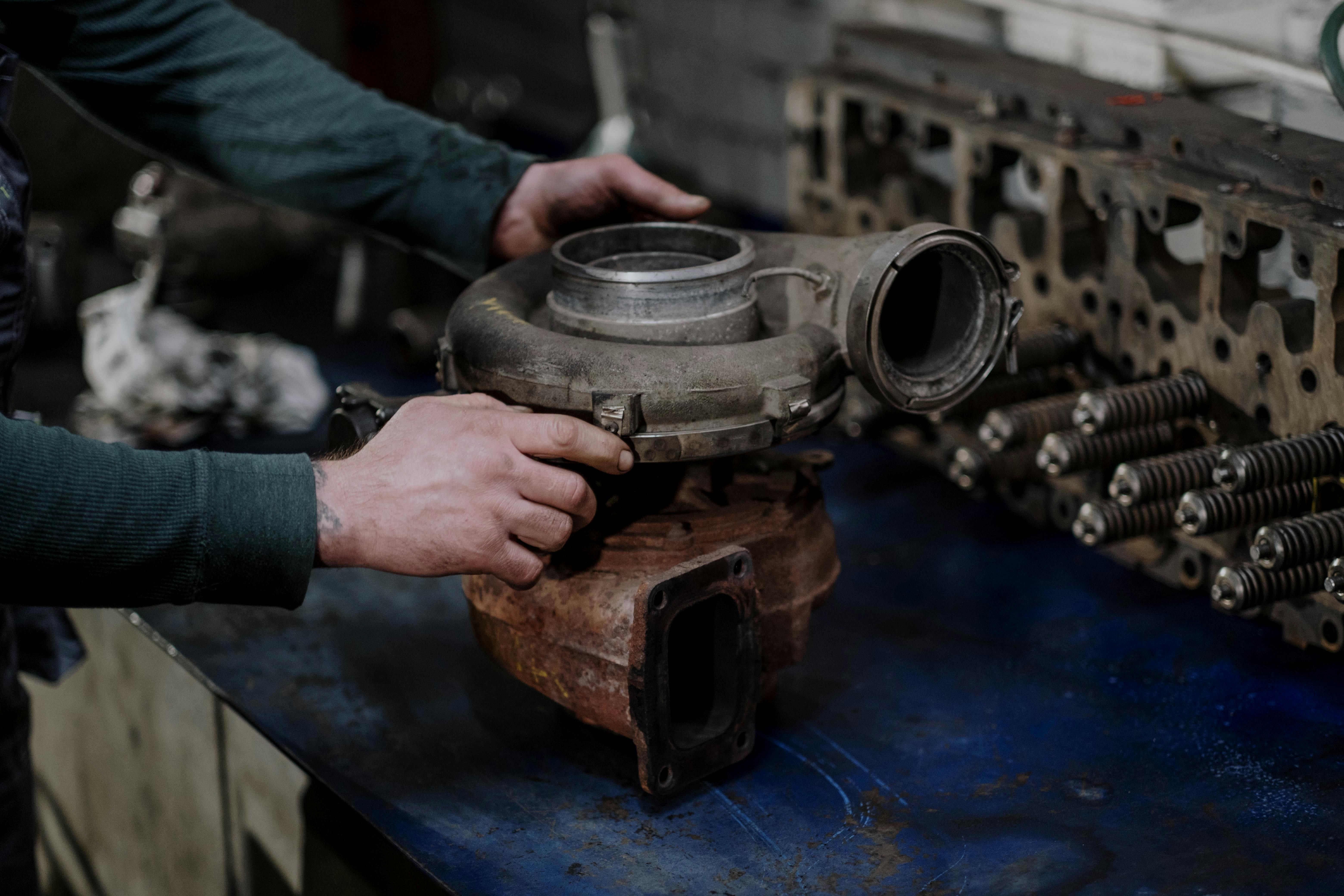
Turbocharging is a method of increasing engine power by compressing the incoming air before it enters the combustion chamber.
The turbocharger uses energy from the engine's exhaust gases to rotate a turbine, which drives a compressor that forces additional air into the engine.
How Does a Turbocharger Work?
⬇
Spin the Turbine
⬇
Compressor Rotates
⬇
More Air Enters Cylinder
⬇
More Fuel Can Be Burned
⬇
Higher Power Output
Although this principle is the same for both petrol and diesel engines, the combustion characteristics of each engine make the results quite different.
Effect of Turbocharging on Diesel Engines
Diesel engines naturally operate with excess air and use compression ignition. Because they are designed to withstand high cylinder pressures, they benefit greatly from turbocharging.
Major effects include:
- Significant increase in low-speed torque.
- Higher thermal efficiency.
- Improved fuel economy.
- Reduced specific fuel consumption (BSFC).
- Better combustion due to additional oxygen.
- Higher power without substantially increasing engine size.
- Improved performance at high altitudes.
Effect of Turbocharging on Petrol Engines
Petrol engines operate using spark ignition and a nearly stoichiometric air-fuel mixture.
Turbocharging allows more air to enter the cylinders, enabling the engine to burn more fuel and generate substantially higher power.
Major benefits include:
- Higher horsepower.
- Improved acceleration.
- Better power-to-weight ratio.
- Engine downsizing with similar performance.
- Improved performance at high altitude.
However, turbocharging also introduces challenges:
- Higher combustion temperatures.
- Greater risk of engine knocking.
- Need for intercooling.
- Requirement for advanced electronic engine control.
+
More Fuel
⬇
More Power
But
Higher Temperature
Comparison: Turbocharging in Petrol vs Diesel Engines
| Parameter | Petrol Engine | Diesel Engine |
|---|---|---|
| Main Benefit | Higher Horsepower | Higher Torque |
| Fuel Economy | Moderate Improvement | Significant Improvement |
| Risk of Knocking | High | Very Low |
| Compression Ratio | Lower | Higher |
| Engine Response | High-Speed Performance | Low-Speed Pulling Power |
| Typical Applications | Sports Cars, Passenger Cars | Trucks, SUVs, Buses, Tractors |
Why Does Turbocharging Benefit Diesel Engines More?
Diesel engines always operate with excess air, making it easier to utilize additional compressed air supplied by the turbocharger.
Furthermore:
- Higher compression ratios improve combustion.
- No throttle valve reduces pumping losses.
- Compression ignition minimizes knocking issues.
- Diesel engines are mechanically stronger and can tolerate higher cylinder pressures.
Why Can Turbocharged Petrol Engines Knock?
Compressing more air also increases cylinder pressure and temperature.
If the air-fuel mixture becomes excessively hot before the spark plug fires, spontaneous combustion may occur.
This phenomenon is known as:
Engine Knocking (Detonation)
Modern engines prevent knocking using:
- Intercoolers
- Knock sensors
- Electronic ignition timing control
- Direct fuel injection
Advantages of Turbocharging
- Higher engine power.
- Improved fuel efficiency.
- Better altitude performance.
- Reduced engine size (downsizing).
- Lower CO₂ emissions for equivalent power.
- Better volumetric efficiency.
Limitations of Turbocharging
- Turbo lag.
- Higher operating temperatures.
- More complex engine design.
- Higher maintenance costs.
- Requires high-quality engine oil.
- Potential turbocharger wear over time.
Where Are Turbocharged Engines Used?
- Passenger cars
- Performance cars
- SUVs
- Heavy trucks
- Agricultural tractors
- Marine diesel engines
- Aircraft piston engines
- Diesel generators
A Daily Life Analogy
Imagine a person climbing stairs.
Without assistance, they breathe naturally and move at a steady pace.
Now imagine providing them with an oxygen mask that supplies extra oxygen with every breath.
They can perform more work with less fatigue.
A turbocharger performs a similar function for an engine—it supplies additional oxygen, enabling the combustion of more fuel and producing greater power.
The Engineering Perspective
Turbocharging is one of the most significant advancements in internal combustion engine technology. Engineers carefully optimize turbine size, compressor efficiency, boost pressure, intercooling, fuel injection, and engine calibration to maximize performance while ensuring durability and controlling emissions. While turbocharging improves both petrol and diesel engines, diesel engines generally realize greater efficiency gains because of their combustion characteristics and higher compression ratios.
The Philosophy Behind Turbocharging
A turbocharger demonstrates that valuable energy often exists where we least expect it.
Instead of wasting hot exhaust gases, the turbocharger captures that unused energy and transforms it into additional power.
The same idea applies beyond engineering: progress often comes not from finding new resources but from making better use of the resources we already have.
Conclusion
Turbocharging enhances both petrol and diesel engines by forcing more air into the combustion chamber, allowing more fuel to burn efficiently. In petrol engines, it primarily increases horsepower and acceleration, while in diesel engines, it delivers remarkable improvements in torque, fuel economy, and thermal efficiency. Although both engine types benefit from turbocharging, their different combustion processes result in distinct performance characteristics, making turbocharging one of the most influential technologies in modern automotive engineering.


