Introduction
Ignition timing is one of the most critical parameters in spark ignition (SI) engines. It determines the exact moment when the spark plug ignites the air-fuel mixture inside the combustion chamber. Even a slight variation in timing can significantly influence engine performance, fuel efficiency, and exhaust emissions. Therefore, proper control of ignition timing is essential for achieving optimal engine operation.
Image Credit: Pexels — Ignition timing controls when combustion starts relative to piston position inside the engine cylinder.
Definition of Ignition Timing
Ignition timing is defined as the timing at which the spark plug fires in relation to the piston position (usually before top dead center, BTDC). It ensures that combustion occurs at the correct moment to produce maximum useful work.
Since combustion takes time, the spark must be initiated earlier so that complete burning occurs at the correct crank angle.
Types of Ignition Timing
When the spark occurs earlier than normal (more BTDC), it is called advanced timing.
When the spark occurs later than normal, it is called retarded timing.
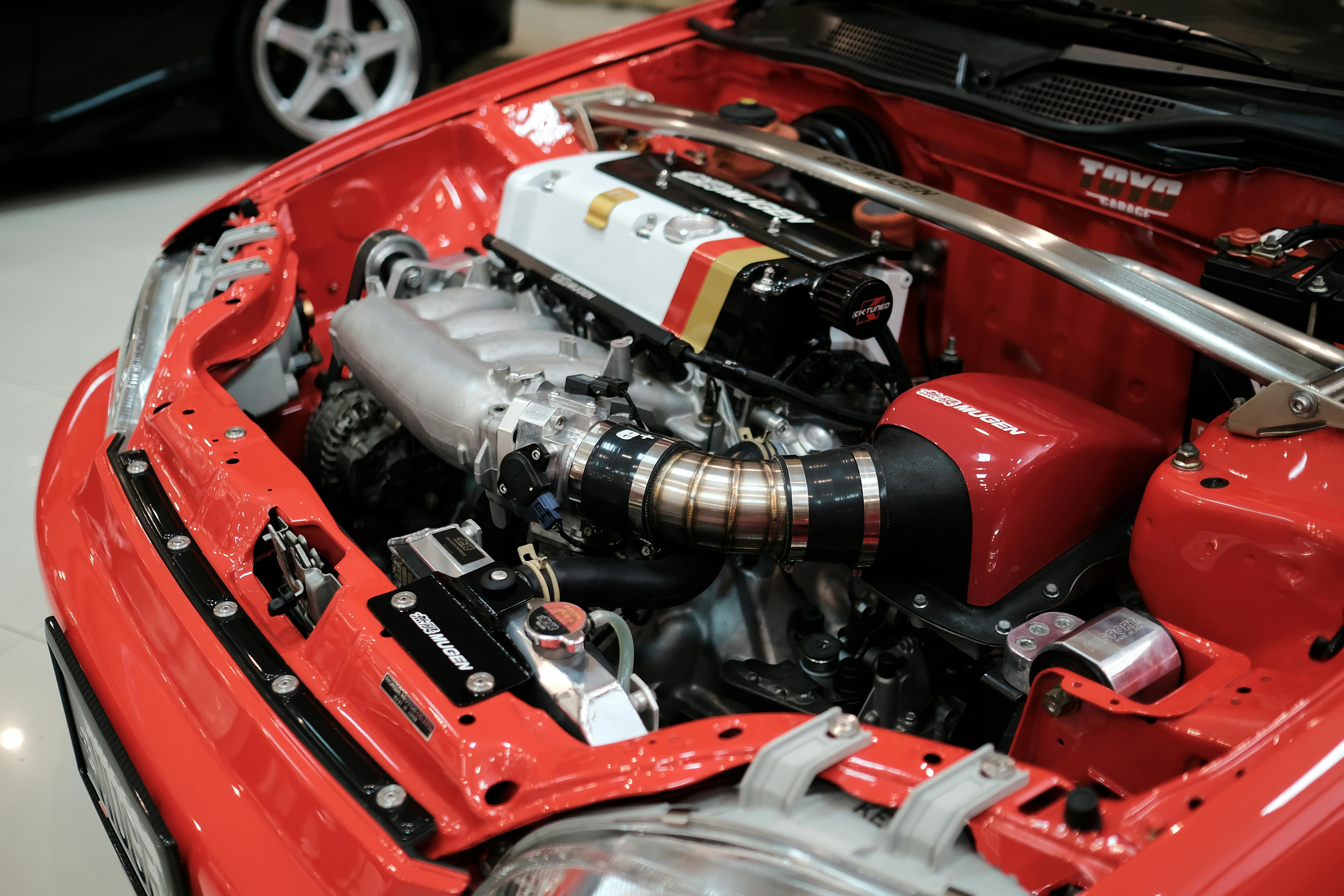
Image Credit: Pexels — Proper ignition timing ensures efficient combustion and smooth engine performance.
Effect on Engine Performance
When ignition timing is set correctly, maximum cylinder pressure occurs at the ideal position, producing maximum torque and power.
If the spark occurs too early, pressure builds while the piston is still moving upward, causing knocking, power loss, and engine stress.
If ignition is delayed, combustion occurs too late, leading to reduced power output and incomplete utilization of fuel energy.
Thus, ignition timing must be optimized to achieve maximum brake torque (MBT), which is the condition for best engine performance.
Effect on Fuel Efficiency
Correct ignition timing ensures complete combustion, leading to higher thermal efficiency and lower fuel consumption.
Slightly advanced timing improves efficiency by allowing more complete combustion, but excessive advancement causes energy loss due to knocking.
Delayed ignition results in incomplete combustion, causing higher fuel consumption and wastage of energy.
Hence, correct ignition timing helps in achieving maximum fuel economy while maintaining engine performance.
Effect on Emissions
Improper timing leads to incomplete combustion, increasing unburnt hydrocarbons.
Retarded timing increases CO emissions due to incomplete oxidation of fuel.
Advanced timing increases combustion temperature, resulting in higher NOx emissions.
Retarded timing increases exhaust temperature, which can help burn some pollutants but may also increase overall emissions.
Thus, ignition timing must be carefully controlled to balance performance and emission standards.
Scientific Explanation
The effect of ignition timing is directly related to the position of peak cylinder pressure. Ideally, this pressure should occur around 10°–15° after TDC for maximum efficiency.
If ignition is too early, pressure rises before TDC, opposing piston motion. If ignition is too late, pressure peaks after the piston has already moved down, reducing useful work. :contentReference[oaicite:11]{index=11}
Therefore, ignition timing plays a crucial role in determining how effectively the chemical energy of fuel is converted into mechanical work.
Conclusion
Ignition timing has a profound effect on engine performance, fuel efficiency, and emissions. Proper timing ensures maximum power output, optimal fuel utilization, and reduced environmental impact. On the other hand, incorrect timing leads to knocking, power loss, higher fuel consumption, and increased emissions. Modern engines use advanced control systems to continuously adjust ignition timing, ensuring efficient and clean engine operation under all conditions.


